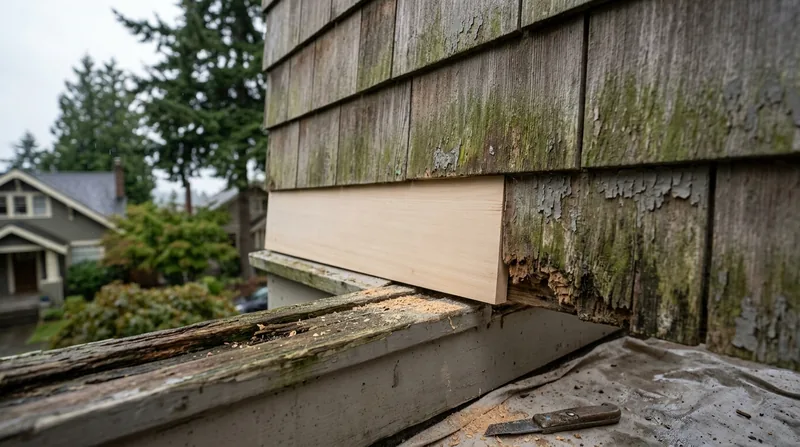




Seattle's persistent drizzle creates ideal conditions for wood rot. Unlike cities with seasonal rain or freeze-thaw cycles that naturally dry wood, the Puget Sound climate keeps moisture against siding, trim, framing and exterior details year-round. Craftsman bungalows in Ballard, Queen Anne Victorians on Capitol Hill, and Scandinavian cottages throughout the city all face the same relentless moisture problem. Wood rot and dry rot repair in Seattle is not a cosmetic concern, it is a structural one. We cut out decayed material, treat what remains, and rebuild with rot-resistant lumber. The result is a permanent repair, not a cosmetic patch. Our work has been protecting Seattle homes since 2016.
Why Wood Rot and Dry Rot Repair Matters in Seattle's Wet Climate
Seattle receives nearly 38 inches of rain per year, but the real problem is not the total rainfall, it is the distribution. The city gets light, persistent drizzle rather than heavy downpours. Wood never fully dries between storms. Sill plates absorb moisture from the ground, fascia and soffit boards collect water that runs off roofs, and wooden trim around windows and doors stays damp for weeks. Over time, fungal decay spreads through the grain, weakening the structural integrity of the wood and compromising the frame. Early detection and repair prevent expensive replacement later.
- Moisture-saturated wood loses strength and becomes soft, spongy, and prone to further decay.
- Rot spreads laterally through the grain and can travel from trim into framing members if left untreated.
- Carpenter ants thrive in moisture-softened wood and accelerate damage once decay has begun.
- Sill plates, rim joists, and floor joists are the most common failure points in Seattle homes because they sit closest to ground moisture.
- Early intervention saves thousands compared to replacing entire structural members or sections of flooring.
Addressing rot promptly keeps your home dry, safe, and structurally sound. For more context on related damage, see our page on floor joist and subfloor repair in Seattle.
Key info: The Seattle Building Department requires permits for structural repairs that affect load-bearing members. Check with your local building department to confirm whether your repair scope requires a permit before work begins.
How We Repair Wood Rot and Dry Rot in Seattle Homes
Our approach is straightforward: we remove only the decayed wood, treat the remaining sound material, and rebuild using species and fasteners chosen for durability in Seattle's climate. We do not replace wood that can be saved, and we do not apply cosmetic coatings to hide the problem. Every repair includes proper drainage and ventilation to prevent recurrence. The work is done on site, typically completed in one to three days depending on scope and access.
- We inspect the affected area and identify the full extent of decay by probing with a tool and visual assessment.
- We cut out all soft, compromised wood back to sound material, creating clean lines and proper geometry for the repair patch.
- We treat exposed wood with a fungicide to arrest any dormant spores in the remaining sound material.
- We install new lumber, typically pressure-treated lumber or naturally rot-resistant species like cedar or redwood, cut to fit the opening precisely.
- We seal all joints and edges with exterior caulk or flashing to prevent water from entering the repair.
- We prime and paint or stain the new wood to match the surrounding finish and protect it from further moisture infiltration.
This method preserves the original structure and character of older Seattle homes while ensuring the repair outlasts the original material. If you suspect rot in multiple areas, our free estimate process will identify all problem zones before any cutting begins.
Example: A 1920s Ballard bungalow had rot in the fascia and soffit boards where the roof meets the exterior wall. We removed the damaged sections, replaced them with cedar, and installed new guttering to direct water away from the wall. The repair cost $1,850 and took two days. Without intervention, the rot would have spread into the rafter tails and roof framing within two to three years, requiring structural framing work at five times the cost.
Repair Methods and When Each One Applies
| Approach | Description | Best For |
|---|---|---|
| Localized patching | Remove the decayed section only, cut a new piece to fit, and install with fasteners and caulk. | Small rot pockets in fascia, soffit, window trim, or sill plates where decay is contained to one area. |
| Full member replacement | Remove the entire board or joist and install a new one of matching species and dimension. | Rot that spans more than 50% of a board's length or affects critical structural members like rim joists or floor joists. |
| Sistering | Install a new structural member alongside the existing one, fastened to share the load. | Floor joists or beams with moderate rot where removing the original would disrupt the floor above or require temporary support. |
| Wood epoxy repair | Fill and harden small voids with two-part epoxy, then sand and paint for a seamless finish. | Cosmetic rot in door jambs, casing, or trim where structural capacity is not affected and the wood is otherwise sound. |
The method we recommend depends on the extent of decay, the location, and whether the member is load-bearing. We explain the choice during the estimate so you understand why we are proposing what we are proposing.
Wood Rot and Dry Rot Repair Cost in Seattle: What to Expect
The cost of wood rot and dry rot repair in Seattle ranges from $650 for a small, localized patch in trim or soffit to $3,000 or more for structural members like floor joists or rim plates. The primary factors that affect price are the size and depth of the decay, the species and dimension of the replacement wood, accessibility, and whether the repair is in a visible area requiring finish work. A repair in a crawlspace costs less than one on an exterior wall that needs to match existing siding or paint. Structural repairs involving floor joists or beam work may require a permit and engineering, which adds to the timeline and cost.
We recommend getting two or three estimates from carpenters who will inspect the damage in person and explain their method. Estimates that are significantly lower than others often reflect incomplete scoping or the use of lower-grade materials. A detailed estimate should itemize labor, materials, and any finishing work so you understand where your money is going. Our pricing page breaks down common scenarios and their typical ranges.
Travel and the estimate itself are free within Seattle and the surrounding areas. We respond to estimate requests within 24 hours at (425) 671-4050.
Wood Rot and Dry Rot Repair Near Me: What Seattle Homeowners Should Know When Hiring
Finding a skilled carpenter for rot repair near Seattle means looking for someone who understands the local climate, uses appropriate materials, and explains their work clearly. A good contractor will show you the decay, explain why it happened, propose a repair method, and stand behind the work with a warranty. Avoid anyone who recommends replacing wood that can be saved or who applies surface sealants without addressing the underlying moisture problem.
Check that your contractor is fully insured and ask for references from recent projects. If your repair involves a load-bearing member or requires a structural change, confirm that the contractor understands the permit process and will coordinate with the Seattle Building Department or your local jurisdiction. Many older Seattle neighborhoods have HOA rules or historic district guidelines that may affect materials or finishes, so ask your contractor whether they have experience working within those constraints. Get the estimate in writing, including a timeline and a description of what is included in the price.
For a free, no-obligation estimate on your rot repair, contact us today. We work throughout Seattle, Bellevue, Redmond, Kirkland, Renton, and surrounding areas.
Wood Rot & Dry Rot Repair in Seattle: Pricing Guide
| Service | Price | Details |
|---|---|---|
| Small trim or soffit repair | Starting at $650 | Localized rot in fascia, soffit, window trim, or door casing, up to 3 linear feet, labor and materials included |
| Sill plate or rim joist patch | Starting at $1,200 | Removal and replacement of decayed section in sill or rim, typically 2 to 4 feet long, includes fungicide treatment and sealing |
| Floor joist or beam repair | Starting at $1,800 | Sistering or partial replacement of floor joist or beam, includes temporary support if needed, may require permit and engineering review |
| Extensive structural rot or multiple areas | On estimate | Large-scale decay affecting multiple members or requiring load-bearing wall assessment requires on-site inspection to scope and price accurately |
| Travel | Included | No mileage fee or travel charge within Seattle and surrounding service areas, estimate response within 24 hours |
| Free estimate | Free | No obligation, in-person inspection, written scope and price, call (425) 671-4050 to schedule |
Indicative pricing, the exact cost depends on square footage, finish, and site access. Free personalized estimate within 24h at (425) 671-4050.


