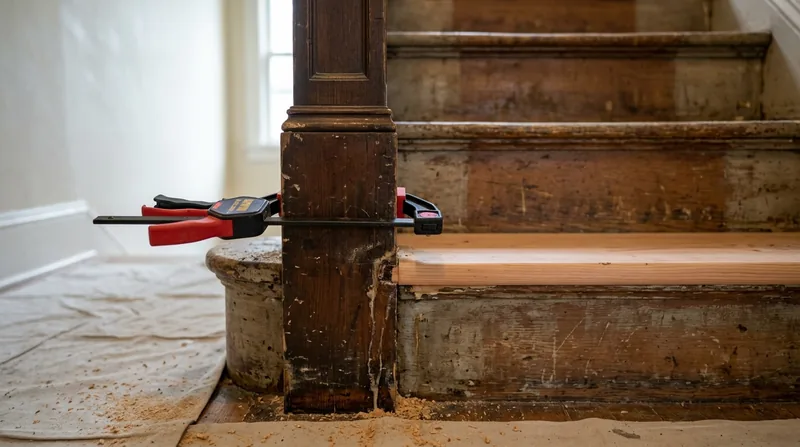




Seattle's oldest neighborhoods climb on staircases built a century ago. Craftsman bungalows in Fremont, Queen Anne Victorians on the hill, Ballard cottages with their original Douglas fir stringers and hand-turned balusters, rowhouses in Capitol Hill stepping up steep terrain, floating houseboats with compact interior stairs, and the newer Eastside subdivisions all depend on stairs that take real punishment. Stair and railing repair in Seattle means fixing the treads that squeak after a hundred winters of moisture, tightening balusters that have loosened from seasonal wood movement, replacing stringers softened by the Puget Sound's relentless drizzle, and restoring or upgrading railings that no longer meet code. We repair what can be salvaged and replace what cannot, keeping the character of your home's period architecture intact while making sure every step is solid and safe.
Why Stair and Railing Repair Matters in Seattle's Older Homes
Seattle's marine climate does not freeze hard enough to crack wood with ice, but it does something slower and more relentless: it keeps wood damp year-round. Moisture sitting against a stair stringer for decades softens the grain, making the wood spongy and weak. Balusters and newel posts, especially where they meet the treads, absorb water and swell seasonally, creating gaps and movement that eventually loosen fasteners. A squeaky tread is not just noise; it is a sign that the glue joint between the tread and stringer is breaking down, and that breakdown accelerates once it starts. A loose banister is a safety issue, particularly in homes with children or elderly residents. Code requires handrails on stairs with four or more risers, and many older Seattle homes have period railings that do not meet modern grip diameter or spacing rules.
- We identify which parts of your staircase can be repaired, reinforced, or glued back together, and which must be replaced to stay safe.
- We restore original balusters, newel posts, and rail profiles that define your home's architectural style and period.
- We install code-compliant handrails and attic ladders where building rules require them, keeping your installation legal and insurable.
- We use fastening and gluing methods that respect old-growth Douglas fir and cedar, which behave differently than modern lumber.
- We document the work so you can provide it to your homeowner's insurance if a claim becomes relevant.
Getting your stairs and railings sound again protects your family and preserves the craftsmanship that makes Seattle homes valuable and livable.
Key info: Seattle building code requires handrails on stairs with four or more risers, with a grip diameter of 1.25 to 2 inches and a clearance of 1.5 inches from the wall. Balusters must be spaced so a 4-inch sphere cannot pass through. If your home's original railings do not meet these rules, you have the option to upgrade them or to leave them in place if the stairs are not a required egress route. Check with the Seattle Department of Construction and Inspections for specifics on your home's situation.
How We Repair and Restore Stairs in Seattle: Our Process
We start by walking your staircase and identifying what is loose, soft, or unsafe. We tap treads and stringers with a small hammer to listen for hollow spots or spongy wood. We check balusters for movement and inspect the glue joints where treads meet stringers. We photograph the railing profile and any decorative details so we can match them if replacement is needed. We then explain what can be saved and what must be replaced, and we give you a clear cost before we start.
- We tighten loose balusters by removing them, cleaning the mortise or dowel hole, and reinstalling them with modern epoxy or hide glue that accepts wood movement.
- We re-glue squeaky treads from underneath by injecting adhesive into the joint and clamping it while the glue sets, restoring the bond without removing the tread.
- We replace soft or rotted stringers by sistering a new Douglas fir or cedar stringer alongside the original, or by replacing the stringer outright if the damage is too deep.
- We restore period railings by carefully removing balusters, cleaning the rail and newel posts, and reinstalling them with reinforcement where needed.
- We install new handrails and code-compliant balusters where your home's original railing does not meet current building rules.
A typical tread-tightening job in a Fremont craftsman bungalow takes one day. A full stringer replacement in a Queen Anne Victorian on the hill may take two to three days depending on access and whether the stairs are interior or exterior. Our work is guaranteed, and we leave your home clean.
Local example: A Capitol Hill rowhouse client called us about stairs that creaked on every step. We found that the glue joints between the treads and stringers had failed, allowing the treads to move. We injected epoxy adhesive from underneath, clamped overnight, and the stairs were silent and solid. The customer kept the original Douglas fir treads and the character of the 1920s staircase intact. Total cost was under $1,200 and took one day.
| Approach | Description | Best for |
|---|---|---|
| Tread Re-gluing | Inject epoxy or hide glue into the joint between tread and stringer, clamp, and let cure. Wood is not removed or altered. | Squeaky treads where the wood is still solid and the joint is simply loose. |
| Baluster Tightening | Remove balusters, clean the mortise or dowel hole, reinstall with modern epoxy or hide glue that allows seasonal wood movement. | Loose or wobbly balusters in period railings where the baluster itself is sound. |
| Stringer Sistering | Install a new Douglas fir or cedar stringer alongside the original damaged stringer, bolted together to share the load. | Stringers with soft spots or minor rot where the stair geometry is good and replacement would be costly. |
| Stringer Replacement | Remove the damaged stringer entirely and install a new one cut and fitted to match the original profile and rise. | Stringers with deep rot, significant damage, or where the original cannot safely support the load anymore. |
| Railing Restoration | Carefully disassemble period railings, clean and reinforce original balusters and posts, reassemble with modern fasteners and adhesive. | Original railings in Craftsman, Victorian, or Scandinavian homes where character preservation is a priority. |
| Code-Compliant Handrail Installation | Install new handrails and balusters that meet current building code for grip diameter, spacing, and height, using modern lumber or profiles. | Homes where the original railing does not meet Seattle code or where a required egress stair needs an upgrade. |
Stair and Railing Repair Cost in Seattle: What to Expect
A straightforward tread-tightening job on a single flight starts at around $600 to $900, depending on how many treads need work and whether we can access the underside of the stairs. A loose baluster or two typically runs $150 to $300 per baluster. A full stringer replacement can range from $1,500 to $3,500 or more, depending on the stringer length, wood species, and whether the stairs are interior or exposed to weather. Code-compliant handrail installation runs $400 to $800 for a single flight. The main factors that move your cost up or down are the number of treads or balusters involved, whether the wood is soft enough to require replacement or solid enough to repair, access to the underside of the staircase, and whether the stairs are interior or exterior (exterior stairs take longer because of weather and exposure).
We always give you a detailed estimate before we start work. That estimate is free, and you are not obligated to book us. We recommend getting two or three estimates so you can compare approaches and pricing. Our estimate includes what we plan to repair, what we plan to replace, the materials we will use, the timeline, and the total cost. We also explain why we recommend what we recommend, so you understand the trade-offs between repair and replacement.
For a detailed breakdown of pricing across all our services, see our full pricing overview. If you have questions about your specific staircase, call us at (425) 671-4050 for a free estimate, or visit our contact page to request one online.
Stair and Railing Repair Near Me: What to Look for When Hiring a Carpentry Contractor in Seattle
When you call a carpentry contractor about your stairs, ask whether they have experience with your home's era and style. A contractor who has worked on Craftsman bungalows in Ballard will know how to handle old-growth Douglas fir differently than someone used to only modern construction. Ask them to explain their diagnosis: what is loose, what is soft, what is safe, and what is not. A good contractor will show you the problem, not just tell you about it. Ask for references from recent stair jobs, and call them. Ask whether they carry liability insurance and whether they pull permits for structural work. In Seattle, stair work that involves altering the stringer or significantly changing the railing geometry may require a permit from the Seattle Department of Construction and Inspections, so confirm with your contractor whether a permit is needed for your job and who will handle it.
- We are fully insured and carry liability and property damage coverage on all jobs.
- We get a free estimate within 24 hours by calling (425) 671-4050 or using our online contact form.
- We explain what we find in your staircase, why we recommend repair or replacement, and what the work will cost before we start.
- We pull permits where required by Seattle code and handle all communication with the city on your behalf.
- We have worked on stairs in Fremont, Queen Anne, Capitol Hill, Ballard, Shoreline, Bellevue, Redmond, and throughout the Seattle area since 2016.
Do not assume that the cheapest estimate is the best one. A contractor who quotes you a price for stringer replacement without looking at the wood is guessing. A contractor who promises to fix a squeaky stair without explaining the cause is not diagnosing the problem. Get multiple estimates, ask questions, and choose the contractor who listens to your concerns and explains the work clearly. We stand behind every repair we do, and we are happy to answer your questions before you hire us. Call us at (425) 671-4050 or request a free estimate online.
Stair & Railing Repair in Seattle: Pricing Guide
| Service | Price | Details |
|---|---|---|
| Tread Re-gluing (per tread) | Starting at $150 | Injection of epoxy adhesive into loose joints between tread and stringer, includes clamping and cure time overnight |
| Baluster Tightening (per baluster) | Starting at $150 | Removal, cleaning of mortise or dowel hole, and reinstallation with modern epoxy or hide glue that accepts wood movement |
| Single Flight Stair Tightening | Starting at $600 | Multiple squeaky treads and loose balusters on a typical eight to twelve step interior staircase, labor and materials included |
| Stringer Sistering or Replacement | Starting at $1,500 | Installation of new Douglas fir or cedar stringer alongside or in place of damaged original, depends on length, species, and interior versus exterior exposure |
| Code-Compliant Handrail Installation | Starting at $400 | New handrail and balusters meeting Seattle building code for grip diameter, spacing, and height on single flight |
| Estimate and Travel | Free | Response within 24 hours at (425) 671-4050, no obligation to book, travel included in Seattle and surrounding areas |
Indicative pricing, the exact cost depends on square footage, finish, and site access. Free personalized estimate within 24h at (425) 671-4050.


